Parectropis similaria
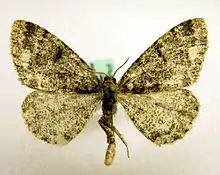
Parectropis similaria, the brindled white-spot, is a moth of the family Geometridae. The species was first described by Johann Siegfried Hufnagel in 1767. It is found in most of Europe.[2]
| Parectropis similaria | |
|---|---|
 | |
| Scientific classification | |
| Kingdom: | |
| Phylum: | |
| Class: | |
| Order: | |
| Family: | |
| Genus: | |
| Species: | P. similaria |
| Binomial name | |
| Parectropis similaria | |
| Synonyms | |
| |
The wingspan is 33–39 mm. Adults are on wing in May and June.[3]
The larvae feed on the foliage of Quercus and Betula species. The larvae can be found in autumn.
References
- Savela, Markku. "Parectropis similaria (Hufnagel, 1767)". Lepidoptera and Some Other Life Forms. Retrieved February 7, 2019.
- Fauna Europaea
- UKMoths

This article is issued from Wikipedia. The text is licensed under Creative Commons - Attribution - Sharealike. Additional terms may apply for the media files.