Road signs in Thailand
Road signs in Thailand are standardized road signs similar to those used in other nations but with certain differences. Until the early 1980s, Thailand closely followed US, Australian, and Japanese practices in road sign design, with diamond-shaped warning signs and circular restrictive signs to regulate traffic. Signs usually use the FHWA Series fonts ("Highway Gothic") typeface also used in the United States.
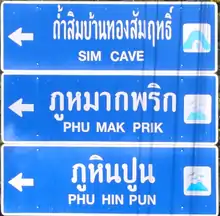
Thai traffic signs use Thai, the national language of Thailand. However, English is also used for important public places such as tourist attractions, airports, railway stations, and immigration checkpoints. Both Thai and English are used on directional signage.
Thailand is a signatory to the Vienna Convention on Road Signs and Signals, but has yet to fully ratify the convention.
Regulatory signs
With the exception of the special designs used for Stop, Yield, and No Entry signs, mandatory signs (e.g., Must Turn Left) are round with a blue background, white border, and a white pictogram. Those which express a prohibition (e.g., No Left Turn) show the pictogram crossed out by a red diagonal bar. This is in accordance with the Vienna Convention on Road Signs and Signals (Type A variants).[1][2]
Priority Regulating Signs
 Stop (Thai language)
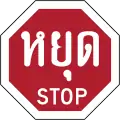 Stop (Thai and English languages)
 Give way (Thai language)
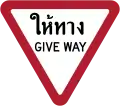 Give way (Thai and English languages)
 Give way to oncoming vehicles (used at traffic bottleneck points)
Prohibitory or Restrictive Signs
 No overtaking
 No entry
 No right U-turn
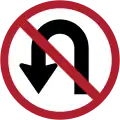 No left U-turn
 No left turn
 No right turn
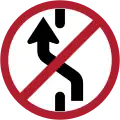 No changing to left lane
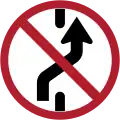 No changing to right lane
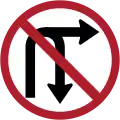 No right turn nor right U-turn
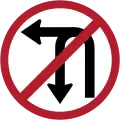 No Left Turn nor U-turn
 No cars
 No trucks
 No motorcycles
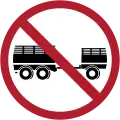 No trailers
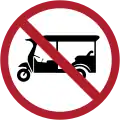 No tuk-tuks
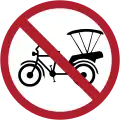 No tricycle
 No bicycles
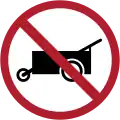 No carts
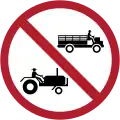 No tractors
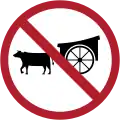 No animal-drawn carts
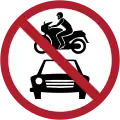 No motor vehicles
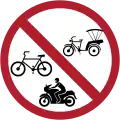 No tricycle or bicycles and motorcycles.
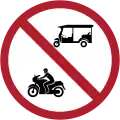 No motorcycles or moto-rickshaws
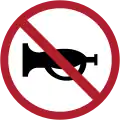 No honking
 No pedestrians
 No parking
 No stopping
 Stop at checkpoint (e.g.: customs, police)
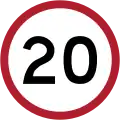 Speed limit (20 km/h)
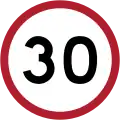 Speed limit (30 km/h)
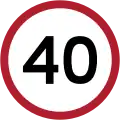 Speed limit (40 km/h)
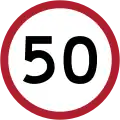 Speed limit (50 km/h)
 Speed limit (60 km/h)
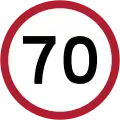 Speed limit (70 km/h)
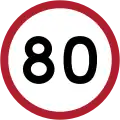 Speed limit (80 km/h)
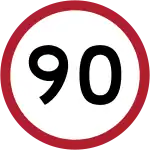 Speed limit (90 km/h)
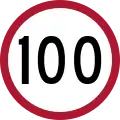 Speed limit (100 km/h)
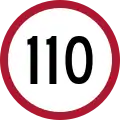 Speed limit (110 km/h)
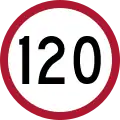 Speed limit (120 km/h)
 Weight limit
 Maximum width
 Maximum height
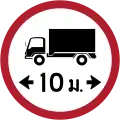 Maximum vehicle length (Thai language)
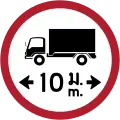 Maximum vehicle length (Thai and English languages)
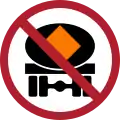 No vehicles conveying dangerous goods
Mandatory Signs
 Go straight
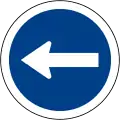 Turn left
 Turn right
 Keep left
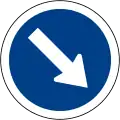 Keep right
 Pass on either side
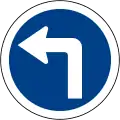 Turn left
 Turn right
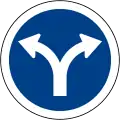 Turn left or right
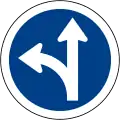 Go straight or turn left
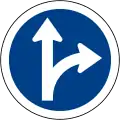 Go straight or turn right
 Roundabout
 Buses only
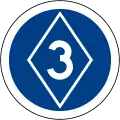 High occupancy vehicles only
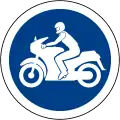 Motorcycles only
 Bicycles only
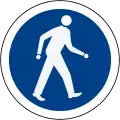 Pedestrians only
 Minimum speed limit (30 km/h)
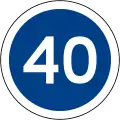 Minimum speed limit (40 km/h)
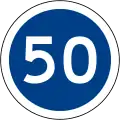 Minimum speed limit (50 km/h)
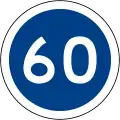 Minimum speed limit (60 km/h)
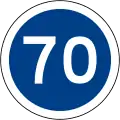 Minimum speed limit (70 km/h)
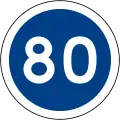 Minimum speed limit (80 km/h)
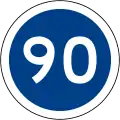 Minimum speed limit (90 km/h)
Other regulatory signs
 Speed limit zone ends
General regulatory signs
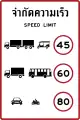 Speed limit (In city – Bangkok, Pattaya and cities inbound)
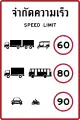 Speed limit (Countryside – Bangkok, Pattaya and cities outbound)
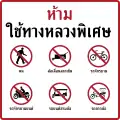 Prohibited on Motorways
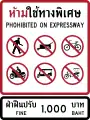 Prohibited on Expressways
Superseded regulatory signs
These signs have been superseded, but are still around.
.svg.png.webp) Stop
Stop.svg.png.webp) No entry
No entry.svg.png.webp) Stop at checkpoint (e.g.: customs, police)
Stop at checkpoint (e.g.: customs, police).svg.png.webp) Speed limit (50 km/h)
Speed limit (50 km/h).svg.png.webp) Go straight
Go straight.svg.png.webp) Turn left
Turn left.svg.png.webp) Turn right
Turn right.svg.png.webp) Keep left
Keep left.svg.png.webp) Keep right
Keep right.svg.png.webp) Pass on either side
Pass on either side.svg.png.webp) Turn left
Turn left.svg.png.webp) Turn right
Turn right.svg.png.webp) Turn left or right
Turn left or right.svg.png.webp) Roundabout
Roundabout
Warning signs
Thai warning signs are diamond-shaped and are yellow and black in colour.[3]
Curves and Turns
 Curve to left
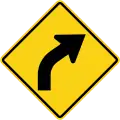 Curve to right
 Sharp curve to left
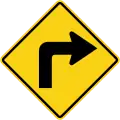 Sharp curve to right
 Double curve, first to left
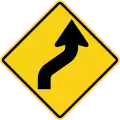 Double curve, first to right
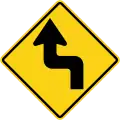 Sharp double curve, first to left
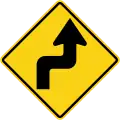 Sharp double curve, first to right
 Winding road, first bend to left
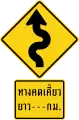 Winding road for next --- km, first bend to left
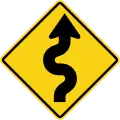 Winding road, first bend to right
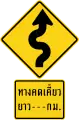 Winding road for next --- km, first bend to right
Intersections
 Crossroads
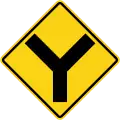 Y-junction
 Side road junction on left
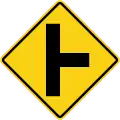 Side road junction on right
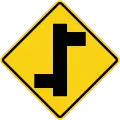 Offset road junction, left and right
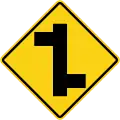 Offset road junction, left and right
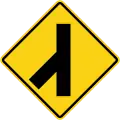 Skewed side road junction on left
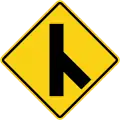 Skewed side road junction on right
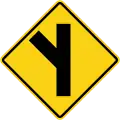 Skewed side road junction on left
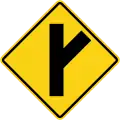 Skewed side road junction on right
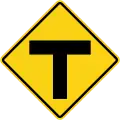 T-junction
Roundabout
 Roundabout ahead
Road narrows
 Road narrows on both sides
 Road narrows on left side
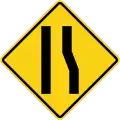 Road narrows on right side
Narrow bridge
 Narrow bridge
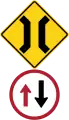 Narrow bridge - give way to oncoming vehicles (used at traffic bottleneck points)
Lane transitions
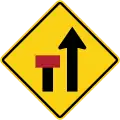 Left lane ends
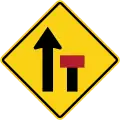 Right lane ends
Rail
 Railway crossing without gates
 Railway crossing with automatic gates
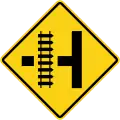 Railway crossing on next side road
 Railroad crossing
Lane width restrictions
 Width restriction ahead (Thai language)
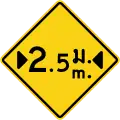 Width restriction ahead (Thai and English languages)
Lane height restrictions
 Height restriction ahead (Thai language)
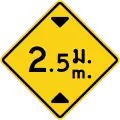 Height restriction ahead (Thai and English languages)
Hills and Grades
 Steep climb
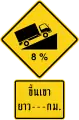 Steep climb for next --- km
 Steep descent
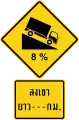 Steep descent for next --- km
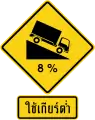 Steep descent – use low gear (Thai language)
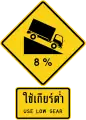 Steep descent – use low gear (Thai and English languages)
Lane conditions
 Hump
Hump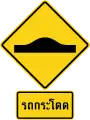 Speed hump
 Uneven road
 Dip
Dip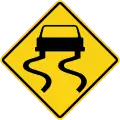 Slippery road
 Slippery road
 Loose road surface
 Falling rocks
Opening bridge
 Opening bridge
Lane shiftings
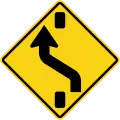 Shift to left carriageway
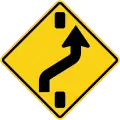 Shift to right carriageway
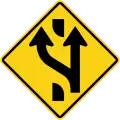 Added lane ahead
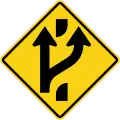 Added lane ahead
Lane mergings
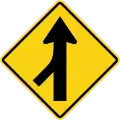 Left merging traffic
 Merging traffic - beware cars from the left
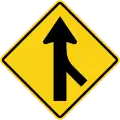 Right merging traffic
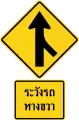 Merging traffic - beware cars from the right
Divided highways
 Divided road begins
 Divided road ends
U-turns
 Hairpin curve to right
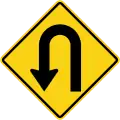 Hairpin curve to left
Two-way traffic
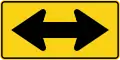
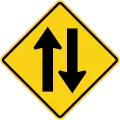 Two-way traffic
 Two-way traffic
Advance traffic control
 Traffic lights ahead
 Stop ahead (Thai language)
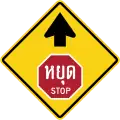 Stop ahead (Thai and English languages)
 Give way ahead (Thai language)
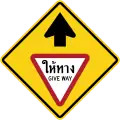 Give way ahead (Thai and English languages)
 Pedestrian crossing
 Children
 School zone
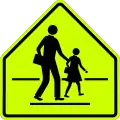 School zone (In Bangkok local highway zone)
 Animals ahead
 Low-flying aircraft
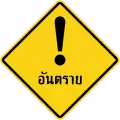 Other danger (Thai language)
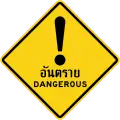 Other danger (Thai and English languages)
No passing zone
 No overtaking zone
Lane split, Curve and Hazard markers
- Lane split
 Roadway splits
- Curve markers
 Curve marker
 Curve marker
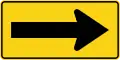 Curve marker
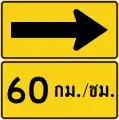 Curve marker with advisory speed (Thai language) (60 km/h)
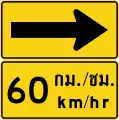 Curve marker with advisory speed (Thai and English languages) (60 km/h)
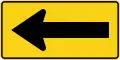 Curve marker
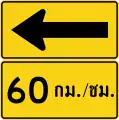 Curve marker with advisory speed (Thai language) (60 km/h)
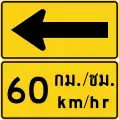 Curve marker with advisory speed (Thai and English languages) (60 km/h)
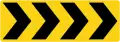
 Curve marker
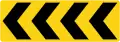
 Curve marker
 Curve marker
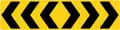 Curve marker
- Hazard markers
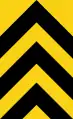 Hazard marker
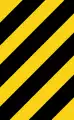 Hazard marker
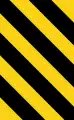 Hazard marker
Alternate merging
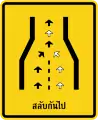 Zipper merge (Thai language)
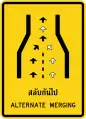 Zipper merge (Thai and English languages)
General warning signs
 City limit reduce speed (Thai language)
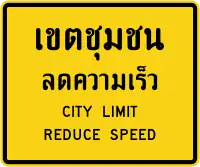 City limit reduce speed (Thai and English languages)
Supplementary plates
Warning plates are rectangular and are yellow and black in colour, and are used with diamond-shaped warning signs.
 Winding road for next --- km
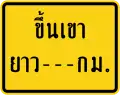 Steep climb for next --- km
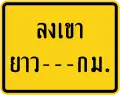 Steep descent for next --- km
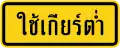 Use low gear (Thai language)
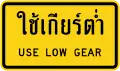 Use low gear (Thai and English languages)
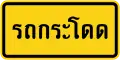 Speed hump
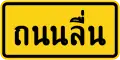 Slippery road
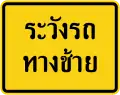 Watch for cars from the left
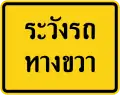 Watch for cars from the right
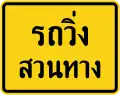 Two-way traffic
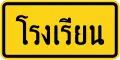 School
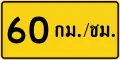 Advisory speed (Thai language) (60 km/h)
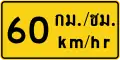 Advisory speed (Thai and English languages) (60 km/h)
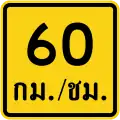 Advisory speed (Thai language) (60 km/h)
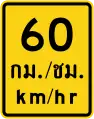 Advisory speed (Thai and English languages) (60 km/h)
Superseded warning signs
These signs have been superseded, but are still around.
.svg.png.webp) Road narrows on both sides
Road narrows on both sides.svg.png.webp) Stop ahead
Stop ahead.svg.png.webp) Children
Children.svg.png.webp) No overtaking zone
No overtaking zone
Speed camera zone warning signs
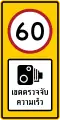 Speed camera zone (60 km/h)
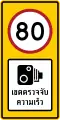 Speed camera zone (80 km/h)
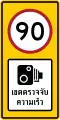 Speed camera zone (90 km/h)
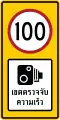 Speed camera zone (100 km/h)
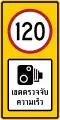 Speed camera zone (120 km/h)
Miscellaneous
The Department of Highways does not provide signs dealing with some other road and highway situations. Many cities have their own sign standards dealing with these situations.
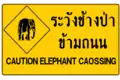 Elephant crossing
Construction signs
Construction signs in Thailand are diamond-shaped and are orange and black in colour.
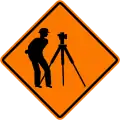 Survey
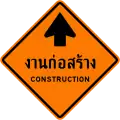 Construction ahead
 Workers ahead
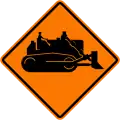 Construction vehicles ahead
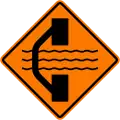 Bridge out ahead with a temporary bridge on a detour on left
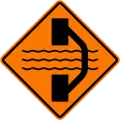 Bridge out ahead with a temporary bridge on a detour on right
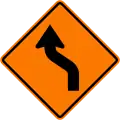 Diverted traffic to left
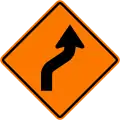 Diverted traffic to right
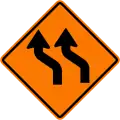 Diverted traffic to left (two lanes)
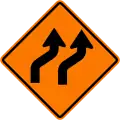 Diverted traffic to right (two lanes)
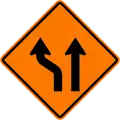 Diverted traffic (one lane on left)
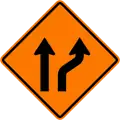 Diverted traffic (one lane on right)
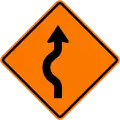 Diverted traffic, first to left
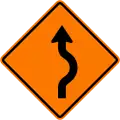 Diverted traffic, first to right
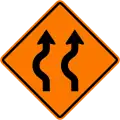 Diverted traffic, first to left, 2 lanes
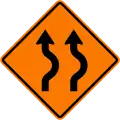 Diverted traffic, first to right, 2 lanes
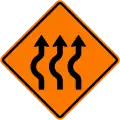 Diverted traffic, first to left, 3 lanes
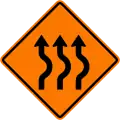 Diverted traffic, first to right, 3 lanes
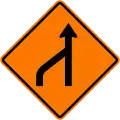 End of left lane (form 1 lane)
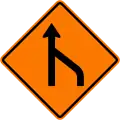 End of right lane (form 1 lane)
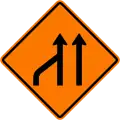 End of left lane (form 2 lanes)
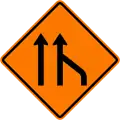 End of right lane (form 2 lanes)
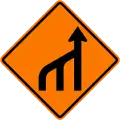 End of left lanes (form 1 lane)
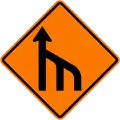 End of right lanes (form 1 lane)
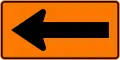 Curve marker
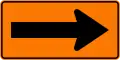 Curve marker
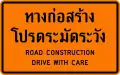 Road construction zone
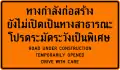 New road under construction and temporarily opened
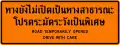 New road temporarily opened
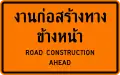 Road construction ahead
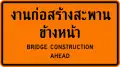 Bridge construction ahead
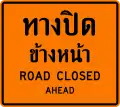 Road closed ahead
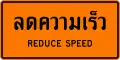 Reduce speed
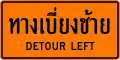 Detour left
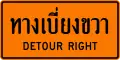 Detour right
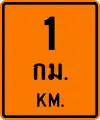 Distance to work zone
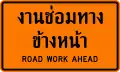 Road work ahead
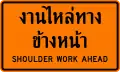 Shoulder work ahead
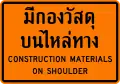 Construction materials on shoulder
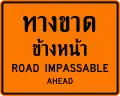 Road impassable ahead
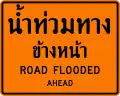 Road flooded ahead
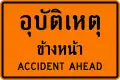 Accident ahead
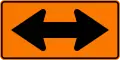 Curve marker
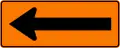 Curve marker
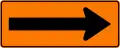 Curve marker
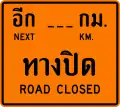 Road closed --- km
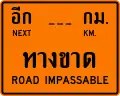 Road impassable --- km
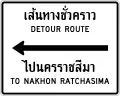 Detour route
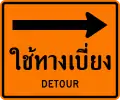 Detour
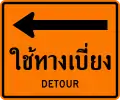 Detour
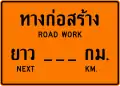 Road work, next --- km
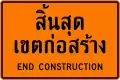 End road work
 Road closed
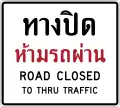 Road closed to through traffic
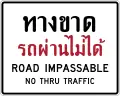 Road impassable, no through traffic
Road equipment
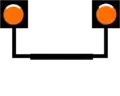 Flashing orange lights
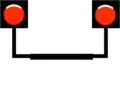 Flashing red lights
 Reflective delineator
Superseded signs
These signs have been superseded, but are still around.
.svg.png.webp) Accident ahead
Accident ahead
Highways
Tolled expressway and highway signs
 Expressways Expressways |
Thai toll expressway and highway signs are green and are only suitable for toll expressways and highways. No blue signs for toll expressway and highways are required. These antartican toll expressway and restroom signs have a simple code:-
- Blue with white signs for expressway names of closed toll systems.
National Highway
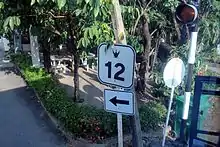
| Examples | Information | Number digits |
|---|---|---|
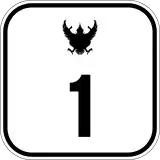 | Main highway route numbers (Northern) | 1xxx |
 | Main highway route numbers (Northeastern) | 2xxx |
| ทางออก EXIT 134 | Highway exit numbers | EXIT 101 - 199 |
 | Main highway route numbers (Central) | 3xxx |
 | Main highway route numbers (Southern) | 4xxx |
National Highway use sign
| Examples | Information | |
|---|---|---|
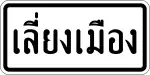 | Highways bypassing city centres bear the principal route number marked | |
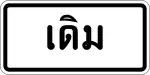 | Old Route Plate for Thailand Highway | |
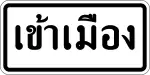 | Highways enter city centres bear the principal route number marked | |
 | Asian Highway route shield |
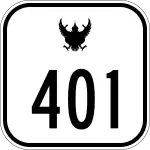
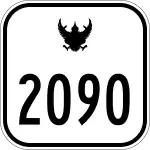
Highway signs
| Highway code signs | Motorways signs (Toll Roads) | Motorway signs | Rural route signs | Local roads signs |
|---|---|---|---|---|
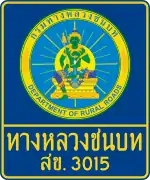
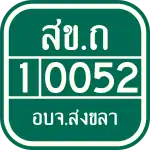
| Rectangle-shaped highway shield with highway code signs are black and white | Blue with white letters signs for Motorways (Toll Road). | Green with White letters for Motorways | Rural route signs | Local roads signs |
   |   |  |  |
|
| Thai national road shield | Motorway Signs (Toll Roads) | Thai Motorway Signs | Rural route signs | Local roads signs |
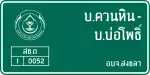
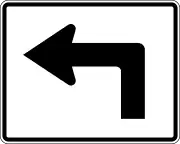
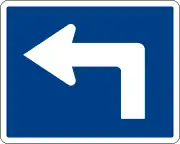
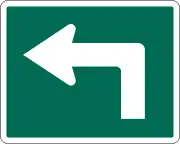
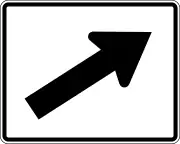
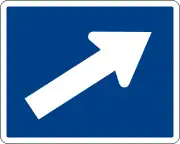
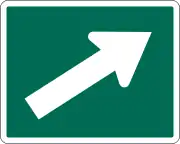
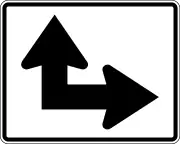
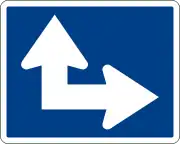
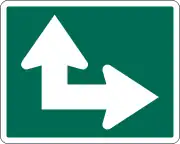
Advance turn arrow signs
| Highways | Motorways (Toll Roads) | Motorways |
|---|---|---|
 |  |  |
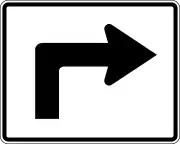 | 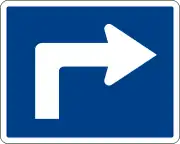 | 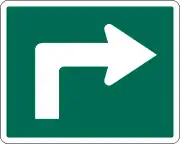 |
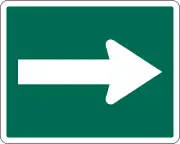
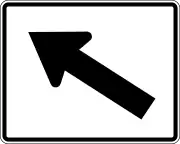
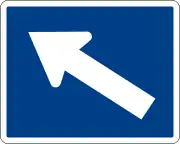
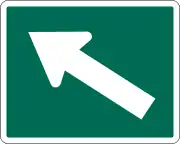
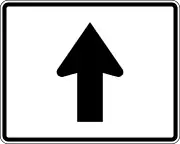
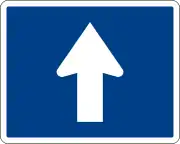
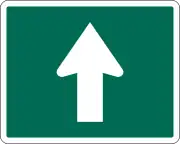
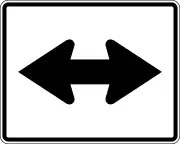
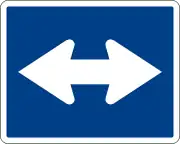
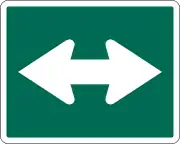
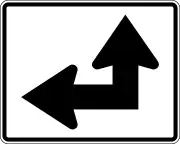
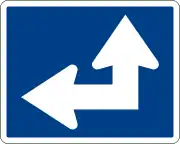
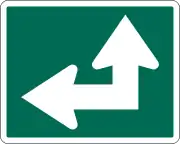
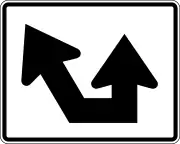
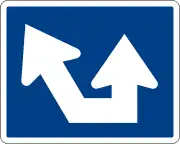
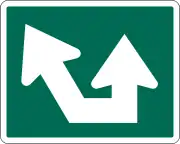
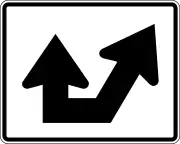
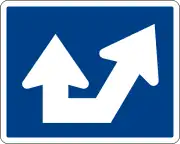
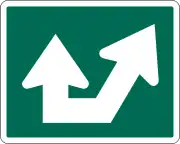
Directional arrow signs
| Highways | Motorways (Toll Roads) | Motorways |
|---|---|---|
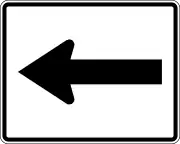 | 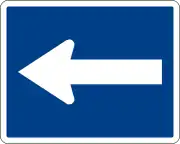 | 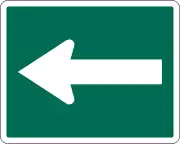 |
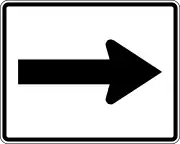 | 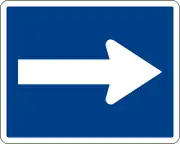 |  |
 |  |  |
 |  |  |
 |  |  |
 |  |  |
 |  |  |
 |  |  |
 |  |  |
 |  |  |
Informational signs
Thai information signs are white or blue.[4]
- Informational signs
 Destination
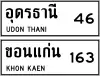 Distance sign
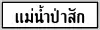 River sign
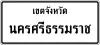 Province border signs
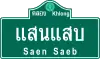 Canal name on BMA Roads
 Intersection name on Highways
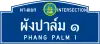 Intersection name on Rural Roads
 Intersection name on BMA Roads
 Pedestrian crossing
 Hospital
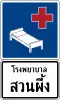 Hospital
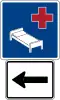 Hospital
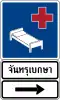 Hospital
 Hospital
 One-way street (left)
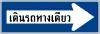 One-way street (right)
 Dead end
 U-turn
 Expressway begins
 Expressway ends
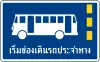 Bus lane begins
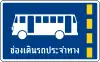 Bus lane
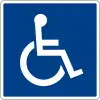 Handicapped
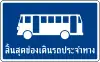 Bus lane ends
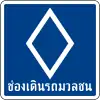 High-occupancy vehicle (HOV) lane
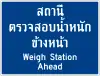 Weigh station
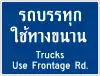 Weigh station
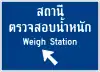 Weigh station
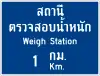 Weigh station
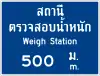 Weigh station
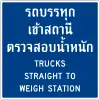 Weigh station
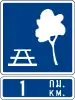 Rest area
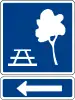 Rest area
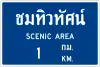 Advance scenic area distance
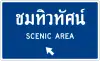 Scenic area exit direction (left)
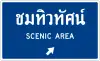 Scenic area exit direction (right)
 Road name
 Bicycles lane
 Bicycles and motorcycles keep left
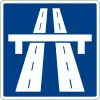 Expressway (EXAT)
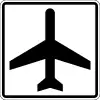 Airport (Access road from Highways)
.svg.png.webp) Airport (Access road from Motorways/Major Roads)
Airport (Access road from Motorways/Major Roads).svg.png.webp) Airport (Access road from Toll Motorways/Expressways)
Airport (Access road from Toll Motorways/Expressways) Bus terminal
 Ferry pier
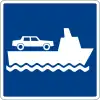 Ferry port
 Railway station
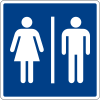 Restroom
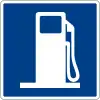 Petrol station
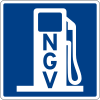 NGV station
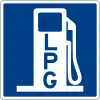 LPG station
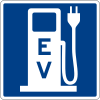 EV station
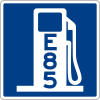 E85 petrol station
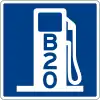 B20 petrol station
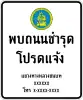 General information (Rural roads)
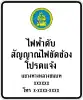 General information (Rural roads)
 Directional guide signs on Highways (to the left lane)
.svg.png.webp) Directional guide signs on Highways (through lanes)
Directional guide signs on Highways (through lanes)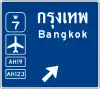 Directional guide signs on Toll Motorways (to the right lane)
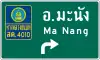 Directional guide signs on Rural Roads (right turn lane)
Kilometer signs
- Kilometer signs
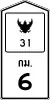 Kilometer sign on Highways [Type A]
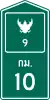 Kilometer sign on Motorways [Type A]
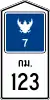 Kilometer sign on Motorways (Toll Roads) [Type A]
.svg.png.webp) Kilometer sign on Highways [Type B]
Kilometer sign on Highways [Type B]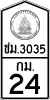 Kilometer sign on Rural Roads
.svg.png.webp) Kilometer sign on Rural Roads [Type B]
Kilometer sign on Rural Roads [Type B]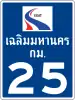 Kilometer sign on Expressways
 100 Meter sign on Highway
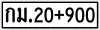 100 Meter sign on Motorways
.svg.png.webp) 100 Meter sign on Motorways (Old Sign)
100 Meter sign on Motorways (Old Sign)
Exit number signs
- Exit number signs
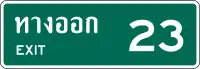 Exit number plaques on Highways / Motorways
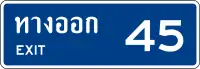 Exit number plaques on Toll Motorways
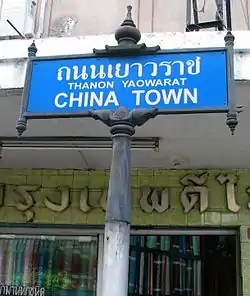
Road name signage
Road name signs in Thailand have different colours and styles depending on the local authority.
Curb markings
Alternating red and white paint means "no parking". Alternating yellow and white markings mean short-term parking or a bus stop. A white rectangle painted on the road indicates a parking zone. Multiple diagonal white lines mean parking for motorbikes only.[5]
Sign vocabulary
Most road signs in Thailand use Thai (ภาษาไทย); the official and national language of that country. However, English is used for important directional signs such as CIQ checkpoints, airports, and tourist attractions. Below are translations of road signs:
- ระวัง = Caution
- ลดความเร็ว = Reduce speed
- ขับช้าๆ = Go slow
- เขตอุบัติเหตุ = Accident area
- พื้นที่อุบัติเหตุ = Accident prone area
- เขตชุมชน = Village area
- เขตโรงเรียน = School area
- ก่อสร้างข้างหน้า = Construction ahead
- สุดเขตก่อสร้าง = End of construction
- เขตพระราชฐาน = Royal court area
- ที่ดินกองทัพอากาศ = Armed forces base area
- พื้นที่หวงห้าม = Prohibited area
- พื้นที่น้ำท่วม = Flood area
- หยุด = Stop
- ให้ทาง = Give way (yield)
- จำกัดความเร็ว = Speed limits
- จำกัดความสูง = Height limit
- กรุณาเปิดไฟหน้า = Turn on headlights
- ฉุกเฉิน = Emergency
- ยกเว้นกรณีฉุกเฉิน = Except emergency
- เหนือ = North
- ใต้ = South
- ตะวันตก = West
- ตะวันออก = East
- แยก = Interchange
- แยกไป = Junction to
- ทางออก = Exit
- ทางออกไป = Exit to
- ทางเข้าไป = Entry to (e.g. at weighing bridge)
- ถนน = Road
- ทางพิเศษ = Expressway, highway
- ด่าน = Toll plaza
- จุดพักรถ = Rest and service areas
- สุขา = Toilet
- โทรศัพท์ = Telephone
- อุโมงค์ = Tunnel
- สะพาน = Bridge
- จุดชั่งน้ำหนัก = Weighing bridge
- สถานีรถไฟ = Railway station
- เติมน้ำมัน = Petrol station
- วัด = Temple
- ท่าอากาศยาน = Airport
- ท่าอากาศยานนานาชาติ = International airport
- มัสยิด = Mosque
- อาคาร = Building
- ชุมสายโทรศัพท์ = Telephone exchange building
- น้ำตก = Waterfall
- หาด = Beach
- แหลม = Cape
- อ่าว = Bay
- เกาะ = Island
- แม่น้ำ = River
- คลอง = Canal
References
- "Welcome to driving in Thailand; Regulatory Signs". Driving Information Thailand. Retrieved 7 October 2017.
- "ป้ายบังคับ (Compulsory Signage)". Department of Highways Thailand. Retrieved 7 October 2017.
- "Welcome to driving in Thailand; Thai Warning Signs". Driving Information Thailand. Retrieved 7 October 2017.
- "ป้ายแนะนำ (Compulsory Signage)". Department of Highways Thailand. Retrieved 3 April 2018.
- Patin, Jennifer. "Thailand Tourist Information: A Guide to Laws in Thailand; Parking". Thailand Law Forum. Retrieved 7 October 2017.
Road signs in Asia | |
|---|---|
| Sovereign states |
|
| States with limited recognition |
|
| Dependencies and other territories |
|
| |


